REVIEW · TOURS
Castries City Walking Tours
Castries makes you work for its stories. This private walk brings them into focus through the Castries Food Market, local parks, churches, monuments, and the lives of St Lucia’s two Nobel Prize winners. I like the personal format and the chance to see everyday Castries rather than only cruise-port sights. I also like that guides such as Shelly, Georges, and Ricardo have been praised for making the past easy to follow.
The main drawback is simple: Castries has suffered devastating fires, so little old architecture remains. If you expect grand colonial buildings, museums, or fortress walls, this tour may feel thin. You are paying for interpretation, local context, and conversation, not a parade of preserved monuments.
In This Review
- Key points to know before you book
- What the Castries city walk is really about
- Starting at 55 John Compton Highway
- An hour inside Castries Food Market
- Derek Walcott Square and St Lucia’s Nobel story
- Jean Baptiste Bideau and two brief historic stops
- Colonial power, religion, and the city’s missing old buildings
- The guide can make or break the walk
- Is $35 a fair price?
- Who will enjoy this private Castries experience?
- Should you book Castries City Walking Tours?
- FAQ
- How long does Castries City Walking Tours last?
- Where does the tour start?
- Where does the tour finish?
- Is transportation included?
- Is this a private tour?
- What is included in the price?
- Can service animals participate?
- What is the cancellation policy?
Key points to know before you book

- The Castries Food Market takes center stage: Plan about an hour among local produce, spices, and street-level city life.
- Two Nobel Prize winners shape the story: Derek Walcott Square connects you with St Lucia’s unusual literary record.
- This is a private walk: Only your own group takes part, so the guide can adjust the pace and answer personal questions.
- Shelly and Georges receive especially warm praise: Their friendly, attentive approach has helped make the tour memorable for many people.
- Food sampling needs clarification: Bottled water or fresh coconut water is included, but full food sampling is tied to the Taste of St. Lucia and food-combination tours.
- The walk lasts roughly 90 minutes to two hours: It begins and ends at 55 John Compton Highway in Castries.
What the Castries city walk is really about

At $35 per person, this is a modestly priced introduction to St Lucia’s capital. I see the value less in the number of sights and more in having someone explain why those places matter.
Castries is not a city where every historical chapter sits behind a preserved wall. Fires destroyed much of the older town, leaving gaps in the physical record. A guide helps fill those gaps with stories about colonial rule, European competition, local leaders, religion, politics, and the people who shaped modern St Lucia.
The private format helps. You are not trying to keep up with a large crowd, and your guide can spend more time on subjects that interest you. If your family wants more food-market time, or if you are curious about the Nobel Prize winners, you can make that clear as you walk.
The tour has an average booking lead time of 38 days, which suggests that you should not leave it until the last minute if your dates are fixed. A mobile ticket makes access easy, and group discounts may improve the price for larger parties.
More Walking Tours in St Lucia:
- Castries Market Walking Food Tour by LUCIAN FOOD TOURS
★ 4.5 · 14 reviews - Botanical Garden and Mineral Bath Walking Tour in Soufriere
★ 4.5 · 3 reviews
Starting at 55 John Compton Highway
The meeting point is 55 John Compton Highway, and the activity ends back there. Pickup is offered as a feature, but private transportation is not included, so I would confirm exactly what pickup means before booking. Do not assume a vehicle transfer is part of the $35 price.
The walk is listed at about one hour and 30 minutes to two hours. That range matters in Castries, especially if you are fitting the tour around a cruise schedule, lunch, shopping, or another excursion. The pace may also vary depending on how much time your group spends in the market and how many questions you ask.
Bottled water or fresh coconut water is supplied for convenience. That is a small but useful touch in a warm city. Wear comfortable shoes and carry as little as possible, since a market walk is easier when your hands are free.
An hour inside Castries Food Market
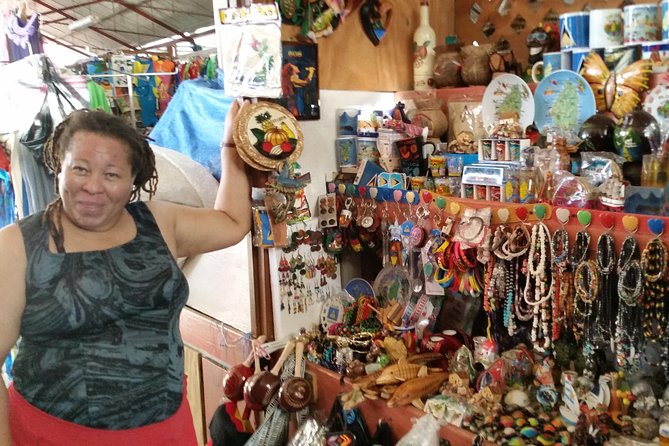
The market is the heart of the experience. You are not simply walking past stalls while a guide lists dates and names. The point is to look closely at what people buy and cook in St Lucia.
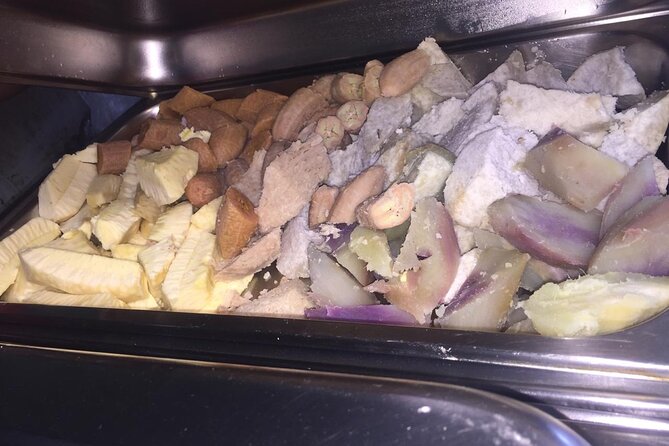
Expect to see local vegetables, fruits, and spices, with your guide explaining unfamiliar ingredients and their place in daily life. Several highly praised guides have taken time to identify produce, discuss traditional uses, and explain the medicinal properties associated with certain foods. That is the sort of detail you cannot get from a sign or a quick online search.
The market also gives you a better feel for Castries than a drive around town. You can smell the spices, watch the trade, and see food as part of the island’s culture rather than as a staged display. I like this part because it connects the city’s past with its present. The market is not only a historical stop. It is a working place.
There is one important point to settle before you arrive. The tour description refers to tasting local fruits, vegetables, and spices, and several guests enjoyed food stops and authentic dishes. Yet the inclusion details say food sampling is provided on the Taste of St. Lucia Food Tour and food-combination tours. For this city history walk, bottled water or fresh coconut water is the safer expectation.
Ask the provider whether tastings are included on your exact booking. If food is your main reason for coming, the separate food tour may be a better fit. If you mainly want the market explained, the regular walking tour can still be worthwhile.
The market appears again near the end of the route, with about 20 minutes for exploring, shopping, or dining. This gives you a second chance to return to a stall, buy something, or pause for a snack. It also means the market is not one quick pass at the start. You get time for both guided discovery and your own browsing.
Derek Walcott Square and St Lucia’s Nobel story

After the market, the walk turns to Derek Walcott Square for about 30 minutes. The square is connected to the bust of Derek Walcott, St Lucia’s poet and Nobel Prize winner.
The guide’s job here is to explain the person behind the monument, not just identify the statue. You will also hear about the people who helped shape St Lucian society and the island’s remarkable record of producing two Nobel Prize winners from one small nation. That distinction gives this stop real weight.
For me, this is where the tour moves beyond a basic city orientation. A monument can be easy to overlook when you are walking alone. With context, the square becomes a place to think about St Lucia’s literary and civic life, not just a patch of greenery with a bust.
The route may use murals, photographs, and public images to add visual support to the story. One well-liked guide, Ricardo, was praised for using pictures and murals to make the history easier to follow. That approach is useful because Castries has fewer surviving historic buildings than some Caribbean capitals.
You should not expect a long museum-style lecture. The stop lasts about half an hour, so the treatment is selective. If you want a detailed study of Walcott’s writing, this will not be enough. If you want to understand why his name matters in St Lucia, it should give you a solid introduction.
More City Tours in St Lucia:
- Castries: Guided City Architecture and Castries Market Tour
★ 4.5 · 16 reviews
Jean Baptiste Bideau and two brief historic stops

The Monument of Jean Baptiste Bideau receives about five minutes. The guide explains his place in St Lucian history, then the group continues to Bideau Park for another five minutes.
These are short stops, but they help connect names, public spaces, and national memory. Jean Baptiste Bideau is not treated as a random label on a street sign. You get the basic reason he is remembered and why the park carries his name.
At the same time, keep your expectations in check. Ten minutes is enough for an introduction, not a full biography. If a particular historical figure catches your interest, use the private format to ask questions. That is one of the better reasons to choose this tour over a large group walk.
The parks also offer a change of pace from the market streets. Guides have been praised for pointing out greenery, flowers, and public spaces along the route. These pauses may appeal to you if you prefer a walk that mixes civic history with ordinary city scenery.
Colonial power, religion, and the city’s missing old buildings
The tour places Castries within the colonial struggle among European powers. That broad frame helps explain why St Lucia’s past is complicated. The island’s identity was shaped by changing outside influence, conflict, administration, and religion.
Holy Trinity Anglican Church is highlighted as a place to consider the island’s religious influence. The supplied route details do not give a separate time allocation for the church, so do not expect a long interior visit or a formal church tour. Its value is mainly as part of the wider story about how faith shaped local society.
The city’s fires are an unavoidable part of the experience. Castries has little visible old architecture left after two major fires, and that can be disappointing if your idea of Caribbean history means forts, mansions, stone streets, and grand colonial facades.
I would not treat the lack of old buildings as a fault in itself. It is part of Castries’ story. The question is whether your guide makes that loss meaningful. Some published ratings praised guides for their command of Caribbean history, while others found the information too basic. The guide you receive matters a great deal.
The guide can make or break the walk
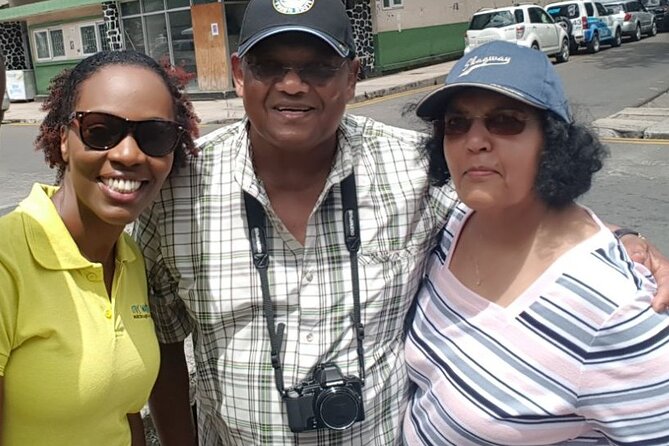
The strongest praise focuses on the people leading the tour. Shelly, also referred to as Schelly, has been singled out for being friendly, attentive, and well prepared. Her market visits have included explanations of unfamiliar foods and their traditional medicinal uses.
Georges has been praised for patience and for explaining both Castries and St Lucia in a clear way. Ricardo has received credit for adding fun facts and using murals and pictures to bring the past into view.
The feedback is not uniformly positive. Some customers felt that a guide talked too much about personal views instead of sticking to the city’s history. Others felt the information was basic and easily available without a guide. That is fair criticism for a short walking tour with no major museum entry.
My advice is to take an active role. Tell your guide what interests you at the start. Ask about the fires, the market foods, Walcott, Bideau, religious life, or the European powers. A private tour gives you room to shape the conversation, and a good guide should welcome that.
The provider has responded seriously to concerns about individual guide performance, including staff appraisal and retraining. That does not guarantee who you will receive or how the walk will unfold, but it shows that guide quality is recognized as central to the product.
Is $35 a fair price?
For $35 per person, I think the tour can offer good value if you want orientation and local explanation. You get a private experience, a guide, water or coconut water, and roughly two hours of walking. A group discount may make it more attractive for families or friends traveling together.
The price is less convincing if you want a long list of admission-based attractions. Most stops are public spaces, and the market is accessible without a ticket. You are paying for the guide’s time and interpretation rather than entry to castles, museums, or preserved estates.
That distinction is important. You can walk through Castries on your own for free. The question is whether you want someone to point out the meaning behind the streets, explain local foods, connect the monuments, and answer questions as you go.
I would book it for a first visit, a short stay, or a port day when you want a quick introduction. I would look elsewhere if you have already spent time in Castries and prefer a highly detailed architectural tour.
Who will enjoy this private Castries experience?
This tour suits you if you like:
- Local markets more than formal attractions
- Short walking tours with plenty of conversation
- Food culture, produce, spices, and everyday life
- Caribbean history explained through public spaces
- Private tours where you can ask questions freely
- A gentle introduction before a longer St Lucia excursion
It may not suit you if you need a packed schedule of ticketed sights. It is also a weaker match if full food tasting is your main goal, unless the provider confirms that sampling is included or you choose the dedicated food tour.
Families, couples, and small groups should find the private format useful. Most people can participate, service animals are allowed, and the route is near public transportation. The tour requires good weather, so a bad-weather cancellation can lead to a new date or a full refund.
Cancel at least 24 hours before the start time for a full refund. Changes or cancellations inside that window are not refunded.
Should you book Castries City Walking Tours?
Book this tour if you want Castries explained by a local guide rather than viewed from a taxi window. The market, Derek Walcott Square, Bideau sites, parks, and religious context create a useful introduction, especially when a strong guide such as Shelly, Georges, or Ricardo leads the way.
Go in knowing that the city’s visible old fabric is limited. You will not find a succession of grand colonial buildings, and the food-tasting details need confirmation. For a private, low-cost city orientation with a real connection to local life, I would consider it a sensible choice. For preserved architecture or a full meal-based tour, choose a different experience.
FAQ
How long does Castries City Walking Tours last?
The tour lasts approximately one hour and 30 minutes to two hours.
Where does the tour start?
It starts at 55 John Compton Highway in Castries, St Lucia.
Where does the tour finish?
The activity ends back at the meeting point.
Is transportation included?
Private transportation is not included. Pickup is offered as a feature, so you should confirm the pickup arrangements before booking.
Is this a private tour?
Yes. Only your own group participates in the activity.
What is included in the price?
Bottled water or fresh coconut water is included. Food sampling is listed for the Taste of St. Lucia Food Tour and food-combination tours, so confirm whether tastings are part of your chosen booking.
Can service animals participate?
Yes. Service animals are allowed.
What is the cancellation policy?
You can cancel at least 24 hours before the start time for a full refund. Cancellations or changes made within 24 hours are not refunded. If poor weather causes the tour to be canceled, you will be offered another date or a full refund.
Just added around St Lucia
- Hewanorra Airport Private Transfers (UVF)★ 3.5 · 3 reviews
- St. Lucia: Scenic Nature Hike & Botanical Garden Escape★ 5.0 · 3 reviews
- All Inclusive Tour Sulfur Mud Bath, waterfall,Beach & lunch break★ 5.0 · 3 reviews
- Botanical Garden and Mineral Bath Walking Tour in Soufriere★ 4.5 · 3 reviews
- From Castries: St. Lucia Scuba Diving Excursion★ 5.0 · 3 reviews
- Private La Soufriere Drive-In Volcano Minibus Tour St Lucia★ 5.0 · 3 reviews
- St. Lucia Fast Track UVF and Private Airport Transfer★ 5.0 · 3 reviews
- AquaVenture Day Pass at Bay Gardens Beach Resort & Spa★ 3.5 · 3 reviews
Tours, compared.


Project Chocolat Tree to Bar Tour at Hotel Chocolat Saint Lucia
Read our review →
Private Full Day Charter: St Lucia Boat Tour to Soufriere
Read our review →
Saint Lucia Sulphur Springs Rejuvenating Mud Bath Tour
Read our review →
St. Lucia Zip line, Aerial Tram and Hiking tour Ultimate 3
Read our review →