
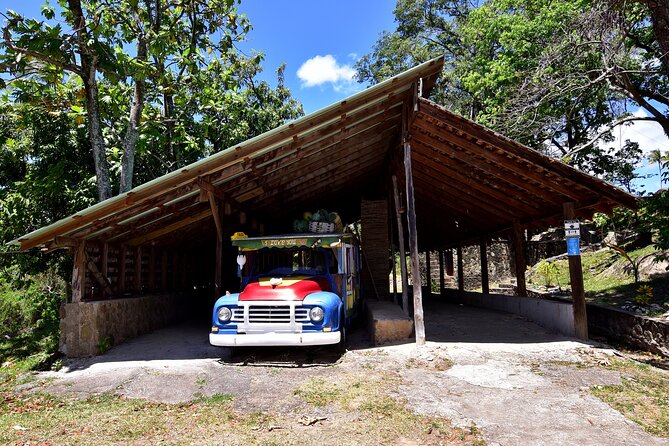
REVIEW · FOOD & DRINK
Historical 18th Century Estate Tour with Coconut Tasting
Old St Lucia comes alive through food.
Morne Coubaril Estate offers an easy way to connect St Lucia’s past with its working crops. I especially like the hands-on coconut and cocoa demonstrations, plus the chance to walk through gardens and a recreated village before reaching the grand estate house. The main consideration is timing: the description promises about an hour, while another detail lists 30 minutes, so confirm the schedule when you book.
The $12 price is hard to fault if your visit includes the full route and tastings. I also like that the estate sits near Soufriere and works well for a cruise-day island tour, though the experience can feel rushed or overly scripted if your guide is not especially engaging.
In This Review
- Key points to know before you go
- A useful introduction to St Lucia’s plantation past
- Starting at Morne Coubaril at 9 a.m.
- Walking through the recreated stick-hut village
- The gardens and medicinal herb walk
- Inside the Monplaisir family estate house
- Coconut dehusking, copra, and the tasting stop
- Cocoa and coffee from bean to drink
- The donkey-powered sugar cane mill
- Scenic views and the value of the $12 price
- How to make the most of the visit
- Who should book Morne Coubaril Estate?
- Final verdict: a good-value history stop with real tastings
- FAQ
- How much does the Morne Coubaril Historical Estate Tour cost?
- How long does the tour last?
- Where does the tour begin and end?
- What time does the tour start?
- Are food and drinks included?
- Is the tour suitable for everyone?
Key points to know before you go
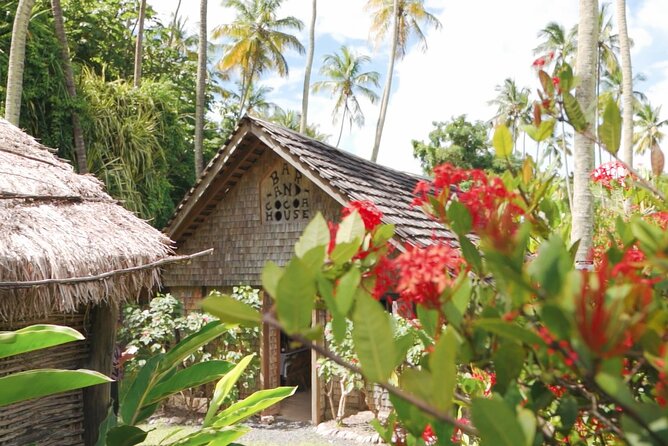
- Coconut work is the star attraction: See a skilled demonstration of dehusking, learn how copra is dried, and taste fresh coconut water and coconut jelly.
- Cocoa becomes a process, not just a sweet: Watch beans ferment, dry, polish, and grind, then taste a ripe cocoa bean.
- The recreated village adds context: Replica stick huts show how people may have lived on the estate in the 1700s, though they are modern reconstructions.
- The gardens reward a slower pace: Native plants, herbs, fruit, and medicinal plants give the tour a strong connection to everyday island life.
- The sugar mill still needs muscle: A donkey or mule operates the traditional cane mill, producing fresh sugar cane juice.
- Plan for a guided visit at 9 a.m.: The tour starts and ends at Morne Coubaril Historical Adventure Park, with no hotel transportation included.
A useful introduction to St Lucia’s plantation past
Morne Coubaril Estate gives you a compact history lesson without turning the visit into a museum walk. The route links buildings, plants, demonstrations, and tastings, so you learn by seeing how crops moved from field to finished product.
The estate’s story reaches back to the 18th century, when sugar, cocoa, coffee, and coconut were important parts of local life and work. The tour does not simply point at old walls and recite dates. It shows the labor behind these crops, from opening a coconut to polishing cocoa beans and pressing sugar cane.
That practical angle is the estate’s strongest feature. I find it easier to understand plantation life when I can see how difficult each step was. A coconut may look simple on a breakfast table, but opening one safely by hand takes skill. Cocoa also looks very different before it becomes a chocolate bar.
The visit is best understood as a historical interpretation of estate life, not as a perfectly preserved 18th century village. The stick huts are replicas, and some of the reconstructions have been criticized for feeling staged. That does not make them useless, but you should see them as teaching tools rather than untouched historic buildings.
More tours and island days worth comparing
- St. Lucia Food and Rum Tour – Taste authentic St. Lucian Food and Culture
★ 5.0 · 204 reviews - St Lucia Rum Tasting and Tour
★ 4.5 · 91 reviews - Rodney Bay Food Tour by LUCIAN FOOD TOURS
★ 5.0 · 76 reviews
Starting at Morne Coubaril at 9 a.m.
You meet your guide at Morne Coubaril Historical Adventure Park in Soufriere at 9 a.m. The activity ends at the same meeting point, which makes the arrangement fairly simple if you are arriving by car, using nearby public transportation, or visiting as part of a larger island excursion.
There is no hotel pickup or drop-off. If you are staying elsewhere on St Lucia, you need to arrange your own way to the estate and allow enough time for the journey. The estate also works well as one stop on a day around Soufriere, where you can combine it with other attractions if your schedule allows.
The tour is listed in some places as approximately 30 minutes and elsewhere as a one-hour visit. That difference matters. A 30-minute version would be a brisk highlights tour, while an hour gives you time for the village, gardens, estate house, several demonstrations, and tastings.
Ask about the expected duration when you arrive, especially if you have a cruise departure, a booked vehicle, or another timed activity. Some visits have lasted longer than an hour, particularly when lunch or additional tastings were added. The regular tour itself ends back at the estate meeting point.
Walking through the recreated stick-hut village
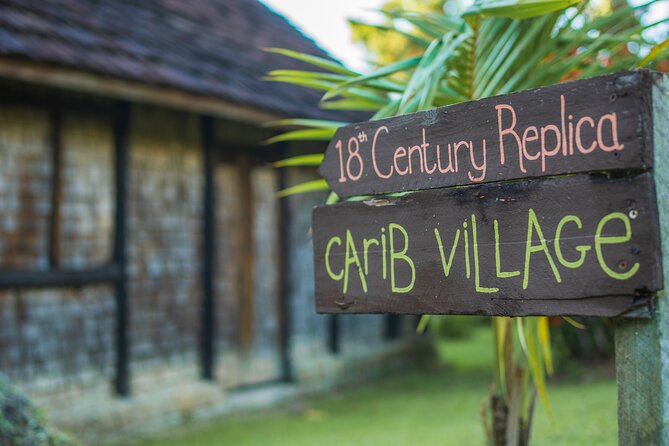
The first major stop is a small village of replica stick huts. These structures represent the homes of island inhabitants during the 1700s and help explain how people lived with local materials and limited tools.
The huts are visually appealing and make good photographs, but do not expect original dwellings. The recreated nature of the village is important. Some of the buildings sit on modern concrete pads, so the display is more about giving you a sense of form and function than presenting an untouched archaeological site.
Your guide may explain how the village fits into the estate’s wider story. This is where the quality of the guide matters most. Strong guides such as Natasha, Natashe, Jonathan, Vincia, Noelita, and Sendyann have been praised for adding local detail and answering questions. Other visits have felt like a young guide simply repeating a script.
If you want more than a quick photo stop, ask questions about daily life, work, food, and the connection between the village and the estate. The tour is more rewarding when the buildings become part of a human story rather than a row of decorative huts.
The gardens and medicinal herb walk
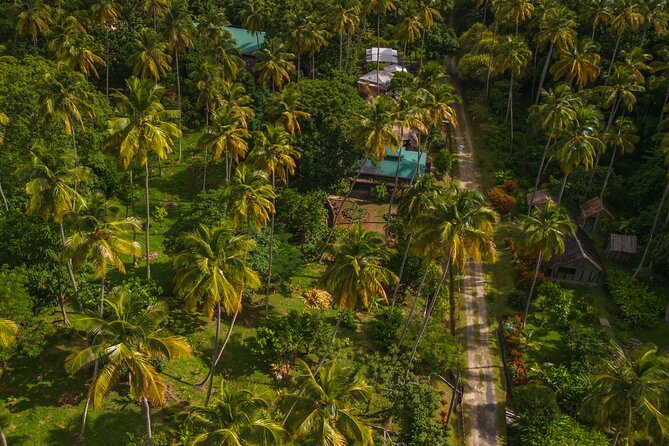
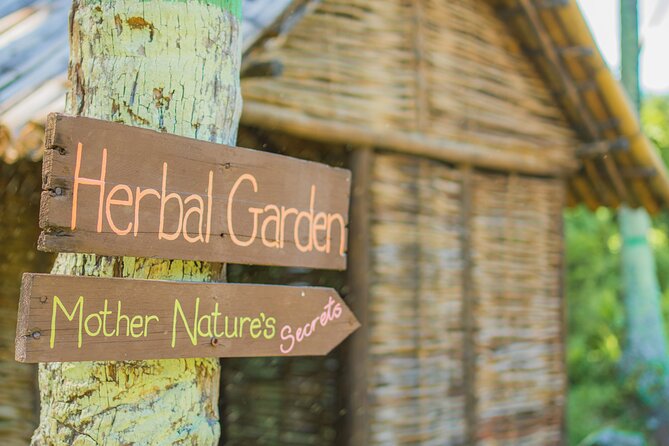
From the village, you continue through the estate gardens. The route features native plants, trees, flowers, fruits, and herbs, with attention given to how certain plants were used to treat illness and minor injuries.
This part of the tour gives the visit a welcome change of pace. After hearing about plantation labor, you start looking closely at the plants themselves. You might sample or smell some of the edible items shown along the way, depending on the guide and the day’s available produce.
Past tastings have included sugar cane, tamarind, basil, mango, coconut, cocoa, and coconut candy. The exact selection is not guaranteed, but the general theme is clear: St Lucia’s food traditions grew from what could be planted, gathered, processed, and preserved locally.
I like this section because it connects history with something you can still recognize today. Medicinal plants were not an abstract subject for people living on an estate. They were part of household knowledge, especially when formal medical care was limited.
Wear shoes you can walk in comfortably. The route is described as easy walking by some visitors, but the activity is not recommended for people who have difficulty walking or for those with visual impairments. Children must stay with an adult.
Something different for another island day:
- St. Lucia Land and Sea Tour
★ 4.5 · 1,730 reviews - ATV Tour in St Lucia
★ 5.0 · 1,021 reviews - St Lucia Customize Private Island Tour
★ 4.5 · 619 reviews - St Lucia Full-Day Catamaran Sightseeing Cruise With Snorkeling
★ 4.5 · 592 reviews
Inside the Monplaisir family estate house
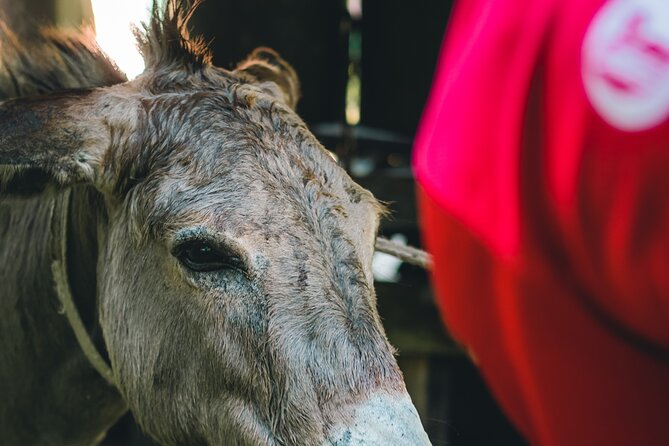
The Monplaisir family’s estate house is the architectural centerpiece of the property. It gives you a look at the more formal side of estate life, in contrast to the modest stick huts in the recreated village.
The contrast is useful, though the tour is not designed as a long architectural study. Your guide explains the house as part of the plantation’s operation and social structure, then moves the group onward to the working demonstrations.
Take a moment to look at the house’s scale and setting. The visit is strongest when you compare it with the labor shown elsewhere on the estate. The home represents the family at the center of the property, while the village and processing areas show the people and work that made the estate function.
The pace can vary. A good guide will pause for questions and point out details. A rushed group may spend only a short time here, so stay near the guide if you want to hear the explanation clearly. One person specifically found it difficult to hear from the back of a group.
Coconut dehusking, copra, and the tasting stop
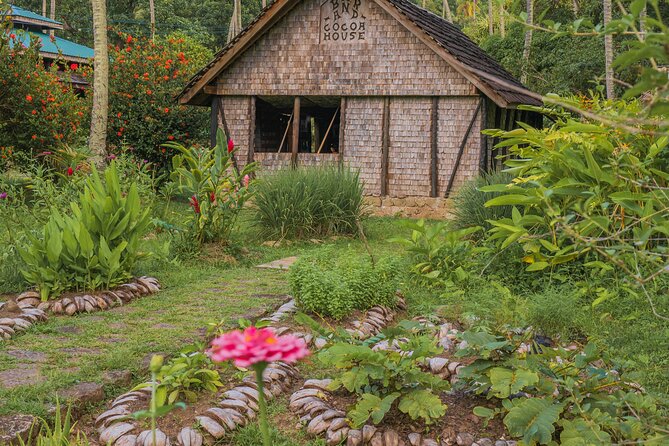
The coconut demonstration is often the most memorable part of the visit. You watch an experienced worker remove the husk by hand, a task that looks quick only because the demonstrator has done it many times.
The guide also explains how coconut meat is dried to make copra. This turns a familiar tropical fruit into a lesson in food production, storage, and labor. You may learn how coconut is prepared in a traditional oven, then taste coconut water and the soft jelly inside a young coconut.
Fresh coconut water is a simple pleasure, but it matters here because it comes directly from the demonstration. The experience feels more authentic than a packaged drink served at a gift shop. You may also get coconut candy or other coconut treats, although the exact samples can vary.
The tasting is not a full meal. If you arrive hungry, do not count on coconut water and jelly to replace lunch. Food and alcoholic drinks are not included in the $12 tour, though they may be available to buy separately depending on the day.
Cocoa and coffee from bean to drink
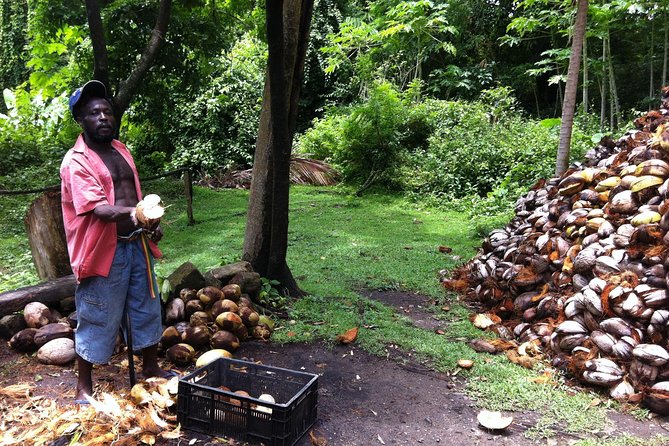
The cocoa and coffee house shows the long route from crop to finished product. You see cocoa beans at several stages, including fermentation and drying. You may also watch the cocoa dance, in which feet are used to polish the beans.
This is one of the tour’s best teaching moments. The foot-polishing demonstration may look playful, but it shows the physical effort once required to prepare cocoa for use. You can also see the beans ground and taste a ripe cocoa bean.
Do not expect a raw cocoa bean to taste like chocolate. The fresh bean has a different flavor and texture, which makes the sample useful rather than merely sweet. It reminds you that chocolate requires several stages of processing before it reaches a candy wrapper.
Some visits have included cocoa nibs and chocolate tastings, while rum and chocolate tastings are separate options rather than part of this basic experience. If you are specifically hoping to sample finished chocolate or rum, ask about the additional cost before committing.
The coffee portion receives less attention in the supplied details than cocoa and coconut. Still, the house helps show that the estate worked with several crops, not just sugar. If cocoa is your main interest, this is the section where you will want to listen closely and ask for extra explanation.
The donkey-powered sugar cane mill
The final working demonstration features a traditional sugar cane mill operated by a donkey or mule. The animal turns the mill while the cane is crushed, producing fresh sugar cane juice for you to taste.
This simple machine helps explain the amount of work behind a familiar island drink. The process is slow compared with modern equipment, and that is precisely the point. You see how power, animals, tools, and human labor once worked together.
The donkey has become part of the estate’s character, with some guides allowing visitors to feed it. The animal-powered display will appeal to families and anyone interested in traditional technology, though it may feel repetitive if you expect a highly interactive activity at every stop.
One difficult account described the presentation as boring and expressed concern about the animal. I would not ignore that criticism. Your enjoyment may depend on how the demonstration is handled and how much explanation the guide adds. The mill is most interesting when treated as a lesson in production, not just a photo opportunity.
Scenic views and the value of the $12 price
The estate includes a viewpoint with dramatic scenery. This gives you a chance to step away from the buildings and processing areas and take in St Lucia from a higher position.
The exact view will depend on conditions and where the group is taken, but it adds variety to a tour that otherwise focuses on structures, plants, and demonstrations. Bring a camera, and keep your phone ready during the garden walk as well.
At $12 per person, the tour offers strong value if you receive the full guided route, several tastings, and live demonstrations. Entrance fees are included, and you are paying for a local guide rather than simply walking through the grounds alone.
The value becomes less clear if the visit is shortened to 30 minutes or if the guide rushes through the stops. A poor presentation can make even an attractive estate feel expensive. The quality of the guide is the biggest variable in the experience.
Lunch is separate. Some estate visits have included Creole chicken, fish, rice, lentils, vegetables, pasta, and other buffet items, but the food has received mixed reactions. I would book the tour for the history and tastings, not because lunch is guaranteed to be a highlight.
How to make the most of the visit
Stay close enough to hear your guide. Groups can include as many as 100 people, and a large group makes it harder to catch every explanation, especially outdoors.
Bring water and protection from the sun. The route moves through open gardens and working areas, and rain can affect the experience. One visitor noted that umbrellas and rain gear were not available during a wet visit, so you should be prepared for changing weather.
Keep your expectations realistic. This is not a quiet, private house tour, and it is not a full plantation-day program. It is a short, guided introduction to estate history with food samples and working demonstrations.
If you are visiting with children, the coconut opening, cocoa processing, donkey-powered mill, and tastings give them something concrete to watch. Just remember that children must be accompanied by an adult, and the walking route may not suit anyone with mobility problems.
The mobile ticket is convenient, and confirmation is provided at booking. Free cancellation is available if you cancel at least 24 hours before the 9 a.m. start time. Inside that 24-hour window, the payment is not refunded and changes are not accepted.
Who should book Morne Coubaril Estate?
I would choose this tour if you want a short cultural stop near Soufriere, especially one that combines buildings, gardens, food, and demonstrations. It suits first-time visitors who want a quick introduction to St Lucia’s plantation economy without spending half a day in a formal museum.
It is also a good choice for cruise passengers with limited time, provided your transportation schedule leaves room for the visit. The fixed 9 a.m. start needs careful planning, and there is no hotel pickup.
I would hesitate if you want an entirely original historic site, a private guide, or a polished theatrical performance. The recreated huts can feel artificial, the tour may be rushed, and guide quality varies.
Final verdict: a good-value history stop with real tastings
Book Morne Coubaril Estate if you value hands-on demonstrations over passive sightseeing. The coconut, cocoa, and sugar cane displays make the history easier to understand, while the gardens and estate house add variety.
At $12, this is a sensible buy when the full hour is available and your guide is engaged. Confirm the duration, arrive ready for outdoor walking, and treat lunch and rum tastings as optional extras. If you do that, the estate offers an enjoyable and affordable look at how St Lucia’s crops shaped daily life.
FAQ
How much does the Morne Coubaril Historical Estate Tour cost?
The tour costs $12 per person. Entrance fees and a local guide are included.
How long does the tour last?
The experience is described as approximately 30 minutes in one section and about one hour in the main tour details. Confirm the expected duration when booking or arriving at the estate.
Where does the tour begin and end?
You meet at Morne Coubaril Historical Adventure Park at Morne Coubaril Estate in St Lucia. The tour ends back at the same meeting point.
What time does the tour start?
The scheduled start time is 9 a.m.
Are food and drinks included?
The tour includes tastings such as coconut water, coconut jelly, cocoa bean, and fresh sugar cane juice. Lunch and alcoholic drinks are not included, though they may be available to purchase separately.
Is the tour suitable for everyone?
Most people can participate, but the tour is not recommended for people who have difficulty walking or for people with visual impairments. Children must be accompanied by an adult.
Just added around St Lucia
- Hewanorra Airport Private Transfers (UVF)★ 3.5 · 3 reviews
- St. Lucia: Scenic Nature Hike & Botanical Garden Escape★ 5.0 · 3 reviews
- All Inclusive Tour Sulfur Mud Bath, waterfall,Beach & lunch break★ 5.0 · 3 reviews
- From Castries: St. Lucia Scuba Diving Excursion★ 5.0 · 3 reviews
- Botanical Garden and Mineral Bath Walking Tour in Soufriere★ 4.5 · 3 reviews
- Private La Soufriere Drive-In Volcano Minibus Tour St Lucia★ 5.0 · 3 reviews
- St. Lucia Fast Track UVF and Private Airport Transfer★ 5.0 · 3 reviews
- AquaVenture Day Pass at Bay Gardens Beach Resort & Spa★ 3.5 · 3 reviews
Food & Drink, compared.

St. Lucia Food and Rum Tour – Taste authentic St. Lucian Food and Culture
Read our review →


St Lucia Bamboo Rafting Experience (+Rum Tasting)
Read our review →

Castries Market Walking Food Tour by LUCIAN FOOD TOURS
Read our review →
Soufriere Excursion with Rum & Chocolate Tasting
Read our review →Browse the lists this tour appears in