
REVIEW · ST LUCIA
Project Chocolat Bean to Bar Experience from Hotel Chocolat
Chocolate begins with fruit, not a wrapper. At Hotel Chocolat’s Project Chocolat Bean to Bar Experience, you taste fresh cacao pulp, learn how beans are roasted and worked, then make your own bar. I like the hands-on format and the chance to taste Rabot Estate chocolate made with St Lucian cacao. The main drawback is that the actual chocolate-making can take about 20 minutes, so some of the one-hour visit may feel like waiting.
I also like how easily this fits into a busy St Lucia day, especially if you add lunch, shopping, or more time at the estate. Guides such as Nathan, Marina, and John have earned praise for being funny, friendly, and clear. Just arrive early and plan your own transport, since transfers are not included and late arrivals may miss part of the session.
In This Review
- Key points at a glance
- What happens during the one-hour session
- From cacao pod to roasted bean
- Making your own bar by hand
- The guides make a real difference
- What you can do before and after the class
- Is $69 a fair price?
- Getting there and timing your visit
- Who will enjoy this most?
- Small practical tips for a better visit
- Should you book the Bean to Bar Experience?
- FAQ
- How long does the Bean to Bar Experience last?
- Where does the experience start and finish?
- What is included in the price?
- Is lunch included?
- Is transportation included?
- Are children allowed to join?
- What is the cancellation policy?
Key points at a glance
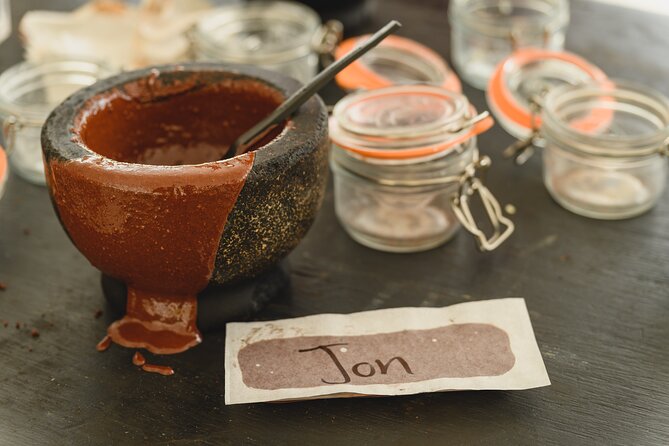
- Taste cacao pulp straight from a fresh pod: This gives you a sharp, juicy first look at chocolate before it becomes sweet and familiar.
- Make a chocolate bar by hand: The work is simple but physical, with plenty of stirring and elbow strength needed to reach the right texture.
- Hear how cacao becomes chocolate: The session covers harvesting, roasting, chocolate-making, and the place of chocolate in St Lucia’s past.
- Meet guides such as Nathan and Marina: Their humor and clear explanations help keep the short class lively.
- Take home an edible souvenir: Your finished bar is a personal keepsake, though St Lucia’s heat means you should protect it from melting.
- Add food and shopping on site: Lunch can be bought separately, and Project Chocolat has gifts and chocolate products to browse.
What happens during the one-hour session
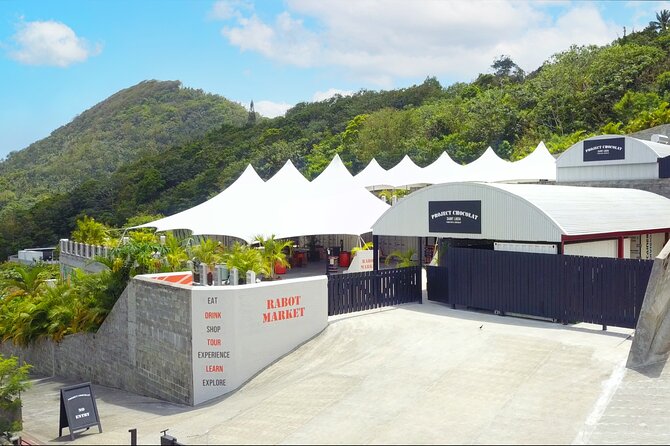
The Bean to Bar Experience takes place at Project Chocolat from Hotel Chocolat on Unnamed Road in Malgretoute, St Lucia. It lasts about one hour and ends where it begins, so you do not need to arrange a second pickup point.
The experience is built around a simple idea: show you the route from cacao pod to chocolate bar, then let you handle part of that process yourself. It is not a long plantation visit or a full production tour. That distinction matters. If you want a broad look at the estate and more of the farming side, the separate Tree to Bar tour is not included.
Your session begins with an introduction to cacao and chocolate-making. You learn about the plant, the stages between harvesting and roasting, and the way chocolate has developed over time. This part gives the activity its context. Without it, making a bar would be little more than a cooking task.
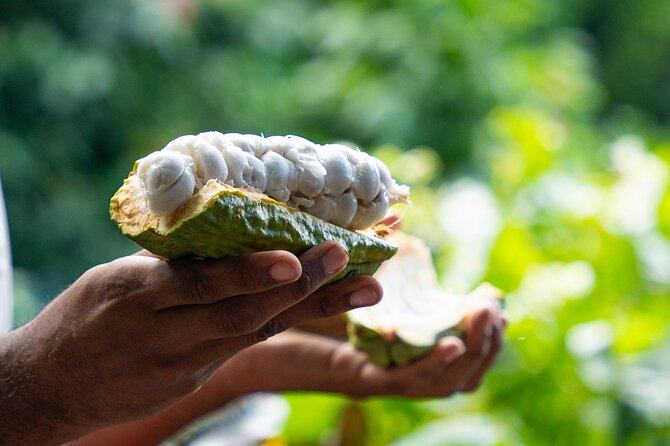
One especially useful taste comes early: fresh cacao pulp from a newly opened pod. The pulp is not what most people picture when they think of chocolate. It is fruity and moist, while the beans inside need several steps before they resemble the chocolate you eat at home.
You also taste Rabot Estate chocolate, a product connected to St Lucia rather than a generic imported sample. This makes the tasting more interesting because you can compare the local character of the chocolate with the familiar bars you already know.
More tours and island days worth comparing
- Project Chocolat Tree to Bar Tour at Hotel Chocolat Saint Lucia
★ 4.5 · 501 reviews - St Lucia Sunset Bar Hop: Island Rhythms
★ 4.5 · 12 reviews - Hotel Chocolat Bean to Bar Experience in St. Lucia
★ 5.0 · 11 reviews
From cacao pod to roasted bean
The educational section explains the main stages of turning cacao into chocolate. You hear about harvesting the pods and working with the beans inside, then move toward roasting and preparation.
Do not expect a full working factory demonstration in this short session. One useful criticism is that the class does not show as much of the manufacturing process as some people want. You might see or handle examples of cacao, but the Bean to Bar format is primarily a guided making class, not a complete farm-to-finished-product tour.
That limitation is easy to understand once you look at the timing. An hour is enough for a compact introduction and a practical activity. It is not enough for a detailed walk through every stage of growing, fermenting, drying, roasting, grinding, and production.
The staff can still add helpful detail when asked. At Project Chocolat, visitors have been shown a ripe cacao pod and what dried cacao looks like, even outside the central session. If you are curious about the farming side, ask questions rather than waiting for every detail to appear in the formal presentation.
The history section is another strong part of the visit. You learn how chocolate has been made and used, including traditional forms such as cocoa sticks and cocoa balls. That background gives you a better respect for the manual work behind a food that usually arrives in a neat supermarket package.
Making your own bar by hand
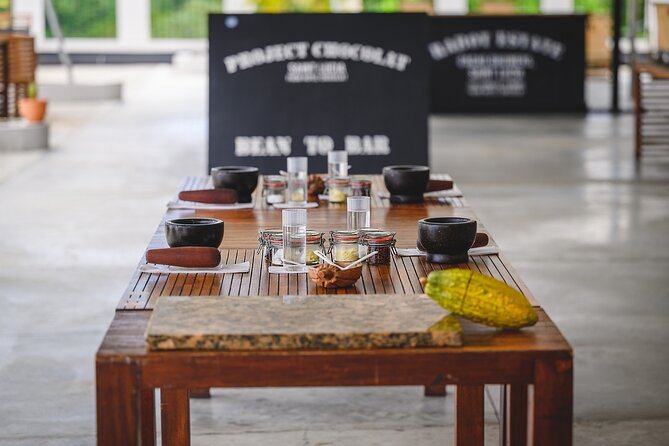
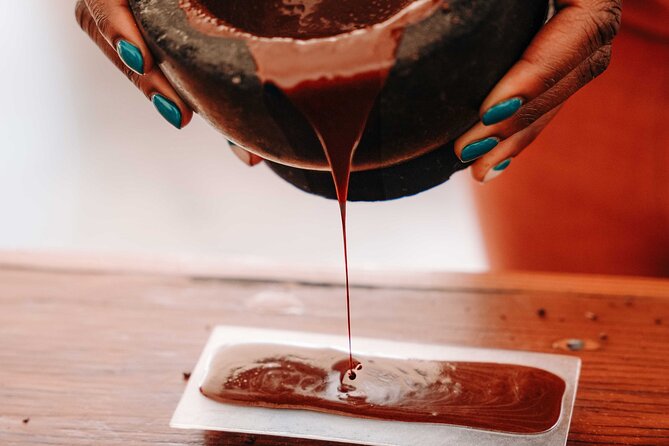
The practical part is the heart of the experience. You work with prepared chocolate and ingredients at your station, following instructions from the guide until the mixture reaches the right consistency.
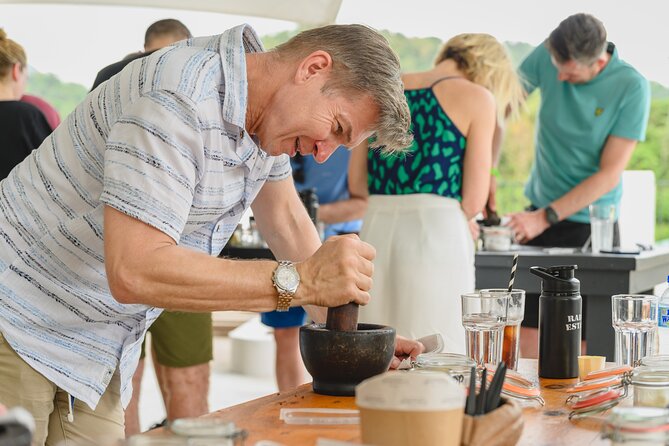
This is easy to understand, but not entirely effortless. Stirring and working the chocolate takes more arm strength than you might expect. Several people have described it as a small workout, so do not picture a passive demonstration where you simply add a topping and pose for a photograph.
That physical element is part of the fun. You get a clearer sense of the care involved in producing chocolate by hand, and the result feels more personal because you made it yourself. Even people who are not devoted chocolate fans can enjoy the task.
The class is suitable for children aged eight and older, which makes it a useful family activity. Younger children cannot join, and the experience may be better for older children who can follow instructions and handle the manual work.
The finished bar becomes your souvenir. It is a better keepsake than an ordinary shop purchase because you remember the process behind it. Pack it carefully for the journey home. St Lucia is warm, and one person found that the bar did not survive the trip, while another advised keeping it in the refrigerator once home.
The guides make a real difference
A short activity rises or falls on the person leading it. Here, the guides are one of the most praised parts of the experience.
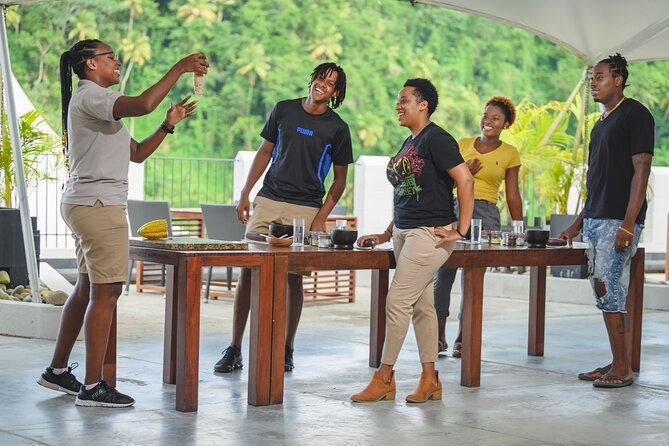
Nathan has been singled out for his humor, warmth, and ability to make people feel welcome. Marina is praised for clear explanations and an engaging manner, while John has been appreciated for answering questions and keeping the walking portions moving.
You can expect the staff to explain the process while adding jokes and personal energy. That helps the history and production information land without turning the hour into a lecture.
The group format also gives you a chance to meet other people. The maximum group size is 50, so the class may be quite social during busy periods. In quieter periods, the class can be much smaller. A couple visiting in the off-season found themselves in a near-private session, which made the activity feel more personal.
Because group size can change, your experience may depend partly on the day. A full class can bring more energy, but a small class gives you more room to ask questions and get attention at your station.
Something different for another island day:
- St. Lucia Land and Sea Tour
★ 4.5 · 1,730 reviews - ATV Tour in St Lucia
★ 5.0 · 1,021 reviews - St Lucia Customize Private Island Tour
★ 4.5 · 619 reviews - St Lucia Full-Day Catamaran Sightseeing Cruise With Snorkeling
★ 4.5 · 592 reviews
What you can do before and after the class
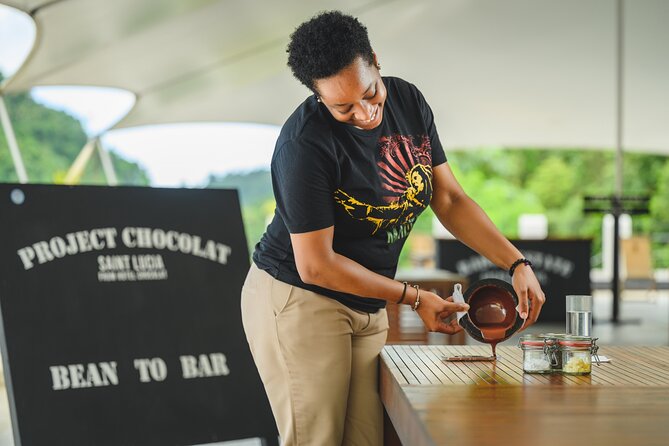
The Bean to Bar session itself is short. If you arrive early, you can use the wider Project Chocolat setting to make the visit feel more complete.
Lunch is not part of the $69 price, but food can be purchased on arrival. This can be convenient if you are building a half-day stop around the experience. Still, check your expectations and budget. One account found the restaurant food overpriced and basic, while other comments praised the food and the wider dining experience.
The site also includes shops selling chocolate and other gift items. You might find bars, drinks, soaps, hand lotion, candles, and other chocolate-related products. This is useful if you want to take home more than the bar you make, but remember that shop purchases cost extra.
The grounds are described as small but attractive, with pleasant spots for photographs. There is also a large tented area, which can make the setting comfortable during rain. However, the activity officially requires good weather. If poor weather causes cancellation, you should be offered another date or a full refund.
Do not assume that extra time at Project Chocolat is included in the one-hour class. You can choose to stay for food or shopping, but those are separate parts of your visit.
Is $69 a fair price?
At $69 per person, this is not a cheap chocolate tasting. The value depends on what you want from the stop.
You are paying for more than a bar. The price covers the guided explanation, cacao and chocolate tastings, the practical class, and the finished souvenir. You also get an activity that works for couples, families with children aged eight and over, and friends looking for something different from a beach day.
I think the price is reasonable if you value participation and local context. The tasting of fresh cacao pulp, the Rabot Estate chocolate, and the hands-on work give the experience a clear identity. You are not simply buying a bar from a shelf.
The value is weaker if you expect a full working tour of cacao production. The actual bar-making portion may last only around 20 minutes, with waiting or browsing around it. If your main goal is to see how cacao is grown, harvested, dried, and processed in depth, you may prefer the Tree to Bar option or need to ask about a longer estate visit.
Food, transportation, and additional products are not included. Add those costs before deciding. The experience is best value when you are already planning to visit the Project Chocolat site and can combine the class with lunch or shopping.
Getting there and timing your visit
You must make your own way to Project Chocolat at Unnamed Road, Malgretoute, St Lucia. No pickup from your hotel or other destination is included.
Build in extra time for the journey. The instructions require you to arrive with good time, and arriving late can cause trouble. One missed session was linked to a late driver, with no rescheduling offered at the time. That is a useful warning if you are relying on a taxi or arranging a tight connection.
Mobile ticketing makes entry simple, but it does not remove the need to plan. Keep your booking confirmation available and check the local start time carefully.
The activity has a maximum of 50 people and requires a minimum number to operate. If the minimum is not reached, the provider may offer another date or experience, or a full refund.
Free cancellation is available up to 24 hours before the start time. Cancel at least 24 hours ahead for a full refund. Changes or cancellations inside that period are not accepted and are not refunded. This experience is also subject to weather cancellation, with a different date or full refund offered if poor conditions stop the session.
Who will enjoy this most?
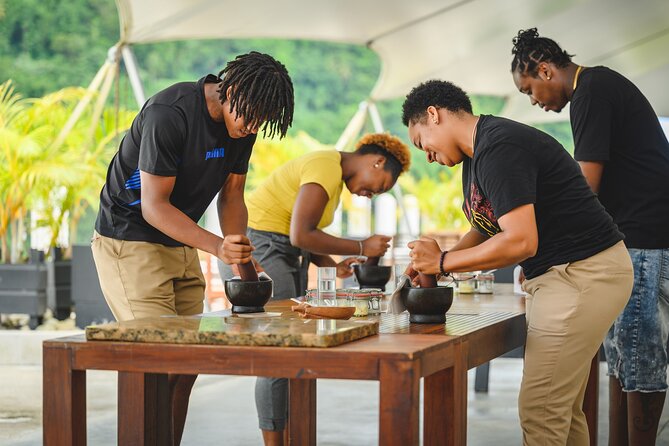
I would choose this for someone who wants a compact, social activity with a clear result. It works well on a busy itinerary because the formal session takes about an hour, and it gives you something active to do rather than another sightseeing stop.
Families with children aged eight and above should find the process approachable. Couples can enjoy the shared task, and the small classes available in quieter periods may feel particularly good for anniversaries or a special holiday.
It also suits people who like food with a story. The fresh pulp, local Rabot Estate chocolate, and explanation of cocoa sticks and balls make this more meaningful than a standard confectionery tasting.
I would hesitate if you dislike group activities, have limited arm strength, or want a long plantation tour. The manual work is manageable but real, and the short format leaves little time for a detailed look at farming or manufacturing.
Small practical tips for a better visit
- Arrive early, especially if your transport is arranged through a driver.
- Wear something comfortable for standing and working at a station.
- Ask about ripe pods and dried cacao if you want more farming detail.
- Leave time for shopping only if you are willing to pay for extra products.
- Buy lunch separately and treat restaurant prices as an additional cost.
- Protect your finished bar from heat, and refrigerate it once home if needed.
- If rain is forecast, confirm the status of the session before setting out.
Should you book the Bean to Bar Experience?
Book it if you want a friendly, hands-on introduction to St Lucian chocolate and like the idea of making a souvenir you can eat. The guides, tastings, local connection, and easy one-hour format give it genuine appeal.
Skip it if you want a full cacao estate tour or expect an hour of continuous chocolate production. The class can include waiting, and the main hands-on section is shorter than the advertised total duration.
For most visitors, I would book it as part of a wider Project Chocolat stop, not as the only reason to cross the island. Add lunch or browsing if your schedule allows, arrange dependable transport, and keep your expectations focused on a fun introduction rather than a complete factory tour.
FAQ
How long does the Bean to Bar Experience last?
The experience lasts approximately one hour.
Where does the experience start and finish?
It starts at Project Chocolat, Unnamed Road, Malgretoute, St Lucia, and ends back at the same meeting point.
What is included in the price?
Chocolate making is included. The experience costs $69 per person.
Is lunch included?
No. Lunch is not included, but it can be purchased on arrival.
Is transportation included?
No. You must arrange transportation from your destination to Project Chocolat.
Are children allowed to join?
The experience is not suitable for children under eight years old.
What is the cancellation policy?
You can cancel up to 24 hours before the start time for a full refund. Cancellations or changes made less than 24 hours before the start time are not refunded or accepted. If poor weather or an insufficient minimum group causes cancellation, you are offered another date or experience, or a full refund.
Just added around St Lucia
- Hewanorra Airport Private Transfers (UVF)★ 3.5 · 3 reviews
- St. Lucia: Scenic Nature Hike & Botanical Garden Escape★ 5.0 · 3 reviews
- All Inclusive Tour Sulfur Mud Bath, waterfall,Beach & lunch break★ 5.0 · 3 reviews
- From Castries: St. Lucia Scuba Diving Excursion★ 5.0 · 3 reviews
- Botanical Garden and Mineral Bath Walking Tour in Soufriere★ 4.5 · 3 reviews
- St. Lucia Fast Track UVF and Private Airport Transfer★ 5.0 · 3 reviews
- Private La Soufriere Drive-In Volcano Minibus Tour St Lucia★ 5.0 · 3 reviews
- AquaVenture Day Pass at Bay Gardens Beach Resort & Spa★ 3.5 · 3 reviews